Categories
Asia Food and agriculture Higher education and research Knowledge mobilization Uncategorized

Un été intense – An intense summer

Quatre jours après que j’ai affiché mon dernier message sur ce site – soit le 20 juin – j’ai subitement perdu ma mère. Même si elle avait 91 ans, et elle nous disait qu’elle sentait la mort venir, ce fut un choc. Cependant, elle voulait mourir, comme elle nous disait souvent. Heureusement la fin était passablement vite et sans douleur d’après le personnel de l’Hôpital Montfort, qui ont offert des soins extraordinaires dans ses derniers jours. Voici l’avis de décès en français et en anglais. Thanks also to the Funeral Cooperative of Ottawa and the family and friends that provided support to me and my family at this difficult time, including helping organize a wonderful celebration of mum’s extraordinary life in July.

Needless to say, much of the summer was spent doing what I needed to do, with the work still going on as my late mother’s executor and heir. Thank goodness we moved back to Ottawa from British Columbia a bit more than a year ago so that we got to spend more time with her and to facilitate my ability to close affairs. Of course, mum’s arrangements for her passing were in perfect order, which facilitates things.

On the professional front, it’s been satisfying to see a 2020 scoping review as well as a more recent 2022 tome published originally in German and now translated into English drawing on the foodscape concept I put forward in the 1990s. I never expected this work to evolve and take so many interesting developments around the world. It’s been an honour to be invited by the German scholars to collaborate and contribute to one of their upcoming volumes.

I’ve also continued to do extensive media commentary on the food crisis, both in Canada and globally. This included an interview with the CBC’s Carolyn Dunn in early August on the implications of grain shipments from the Ukraine on global food security, two interviews on A Little More Conversation, one in August and another in September, and a piece in Maclean’s on the rising cost of living. It was also a thrill to see one of my more scholarly publications come out as a chapter in the Routledge Handbook of Urban Food Governance. Looking forward to some launch events this fall.

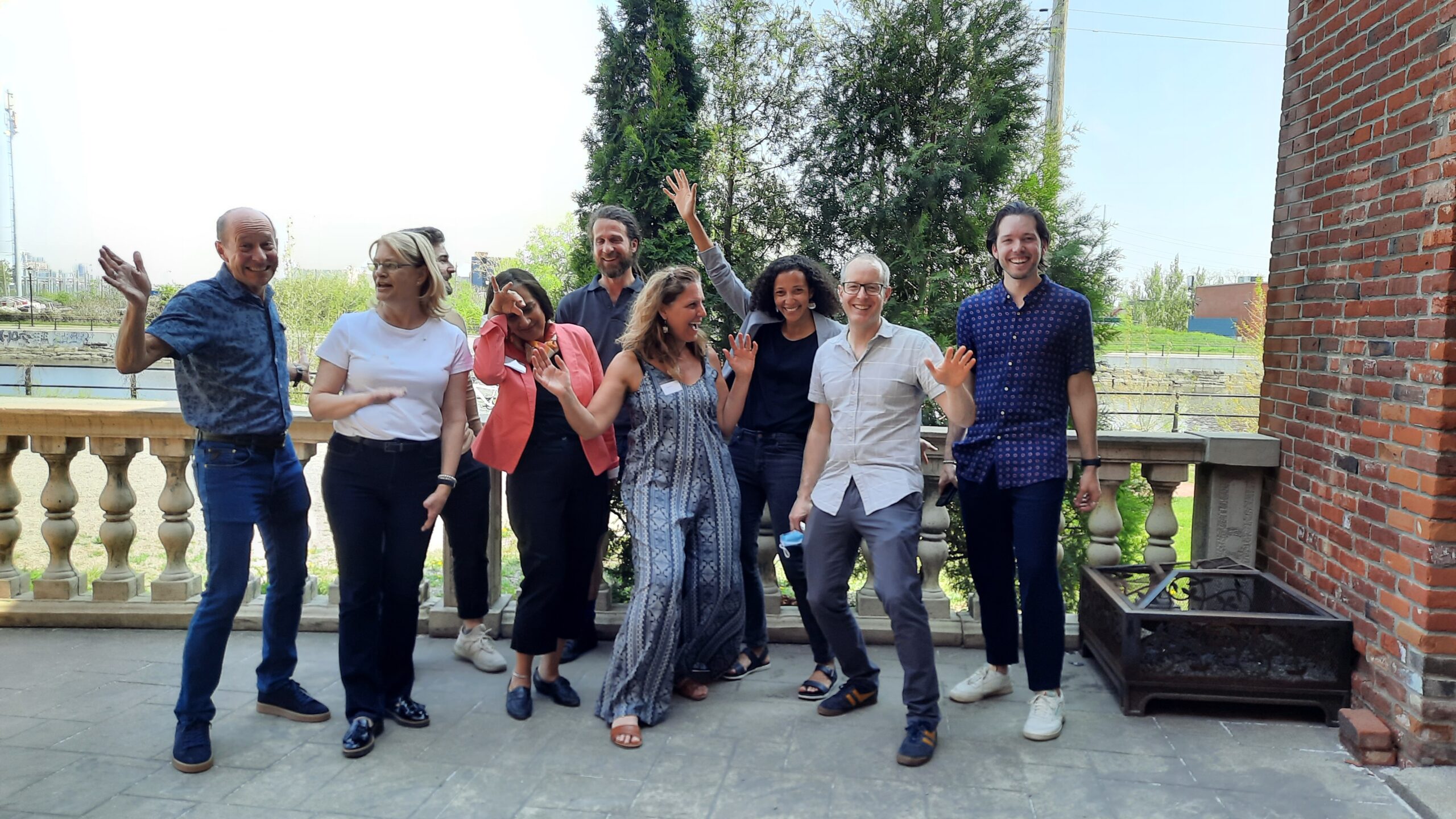
Finalement, ce fut un plaisir de participer au 21e Forum de Banff, cette fois à Charlottetown. Je participate de temps à autre à ce forum concernant les politiques publiques depuis son tout début. Voici la photo de groupe prise au bord de l’eau avec la coopération de la météo! At this year’s Forum, it was great to be invited to speak as part of a “Dockside Chat” panel on the topic of “Has Deglobalization Arrived” sharing reflections on global food insecurity.
Categories
Food and agriculture Higher education and research Knowledge mobilization Uncategorized

The Global Food Crisis – La crise alimentaire mondiale

The last several months have flown by and I have been very preoccupied with the troubling global food crisis, which also impacts wealthy countries like Canada. It’s been an honour to be approached for media commentary on the emerging situation. Krystalle Ramlakhan of CBC Radio interviewed me in February. You can read the online article here that was reproduced into a clip on CBC’s The National with some elements of the interview repurposed for a more in-depth story on CBC Radio in May, available here.

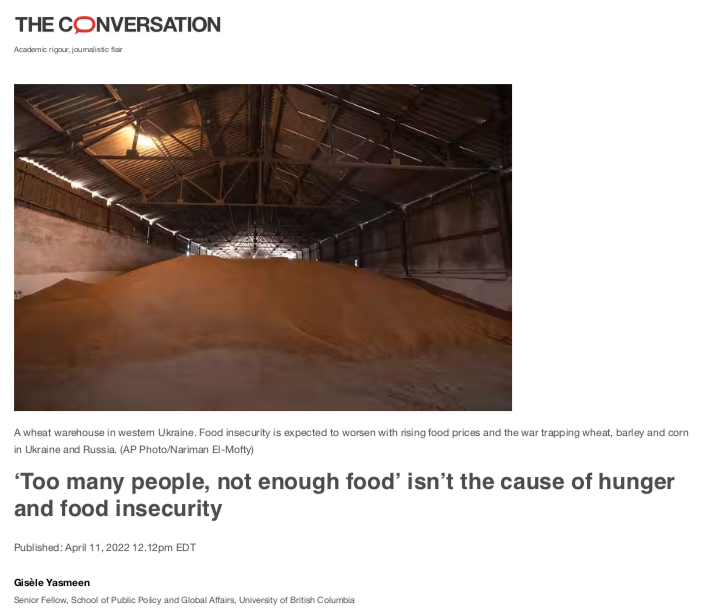
The spring was busy and exciting. I finally got around to publishing an article in The Conversation on the global food system in April after many years of wanting to do so. The timing was perfect for this type of “explainer” and – given the excellent distribution platform and Creative Commons licensing, the article got picked up and republished across Canada and around the world. I was delighted with the uptake and resulting media commentary including syndicated live and recorded radio and television and, by June, another interview used for both CBC The National, with the audio used for CBC Radio’s The World at Six. I also travelled to attend the normally annual National Retreat for Women on the weekend of April 22-24th – our first gathering since 2019 held at beautiful Government House in Victoria. It’s been an honour to serve as a volunteer on the organizing committee with some stellar accomplished women!

Ce fut aussi un honneur d’être élu au conseil d’administration d’Équiterre à la fin du mois d’avril après avoir été encouragée de postuler. Équiterre est le plus important organisme environnemental au Québec qui, en plus, fait un excellent travail dans le domaine des systèmes alimentaires durables. Quel plaisir d’être convié à la retraite annuelle au moi de mai. Voici notre photo de groupe “folle”!

Categories
Food and agriculture Higher education and research Knowledge mobilization Uncategorized

Turning a new leaf… Un nouveau début…

Le français suit…
 
As some of you already know, after nearly three exciting, intense years as Executive Director of Food Secure Canada (FSC) I decided some time ago to step down and take a needed breather but the news was confidential until January 24th. My last day was Friday, January 28th per the message that was shared with FSC’s membership as well as other messages the same day followed by the newsletter on February 9th.
 
I want to thank FSC’s team, volunteer board, members, partners and funders for their dedication. It’s been a privilege to serve this movement with such passionate people, organizations and networks and have policy impact. I’m proud of all that has been accomplished collectively.  I look forward to making continued contributions to food-system transformation from my perch as an Ottawa-based Senior Fellow at the School of Public Policy and Global Affairs at the University of British Columbia.
 
With gratitude…
 
Gisèle
 
Comme certains d’entre vous le savent déjà, après près de trois années passionnantes et intenses en tant que directrice générale du Réseau pour une alimentation durable (RAD), j’ai décidé il y a un certain temps de prendre un recul pour respirer mais les nouvelles étaient confidentielles jusqu’au 24 janvier. Mon dernier jour fut le vendredi 28 janvier tel qu’indiqué dans le message qui a été partagé avec les membres du RAD ainsi que d’autres messages la même journée et l’infolettre le 9 février
 
Je tiens à remercier l’équipe du RAD, le conseil d’administration bénévole, les membres, partenaires et bailleurs de fonds pour leur dévouement. Ce fut un privilège de servir ce mouvement et de travailler avec des personnes, des organisations et des réseaux si passionnés et d’avoir un impact au niveau politique. Je suis très fière de tout ce qui a été accompli collectivement. Au plaisir de continuer de contribuer à la transformation du système alimentaire en tant que « Senior Fellow »  au « School of Public Policy and Global Affairs » à l’Université de la Colombie-Britannique (depuis Ottawa).
 
Toutes mes reconnaissances…
 
Gisèle

FSC team in March 2020 / Équipe du RAD en mars 2020

Categories
Food and agriculture Knowledge mobilization Uncategorized

2021 – What a year / Quelle année

Like 2021, 2020 will be an intense year to remember. In May, I returned to Montréal for about six weeks and eventually vacated my apartment there in late June. Our board also approved a three-year strategic plan that month, which was quite an accomplishment, given the global pandemic. We also hired a few talented new staff members and both ramped up and put to bed some major projects through the summer and early fall. For example, our exciting Sustainable Development Goals programming provides a horizon to 2030 to address organizational and personal long-standing priorities such as food (in)security, improved nutrition and the transition to more sustainable food systems. Our collective future depends on this being done right…

En fin d’été nous avons (re)déménagé à Ottawa, un projet en cours depuis longtemps. Notre maison, louée depuis huit ans, fut en assez bonne condition mais ce n’est jamais évident s’installer… le travail continue et nous espérons que le temps de fêtes sera un moment pour s’avancer un peu plus pour se sentir plus chez nous en 2022.

There were a few highlights this fall that make the last few months particularly memorable and rewarding. In October, I had the honour of being invited to speak at Think Elevate 2030 in Toronto on the topic of “Intersectionality of Food Security, Sustainability, and Public Health”. You can watch the video here. November was exciting with one of our team members being able to attend Cop 26 as well as Chef Rich Francis hosting an Indigenous fusion cooking class at George Brown College with the proceeds going to Food Secure Canada on November 22nd.

Un fait saillant du mois de décembre fut l’invitation de faire parti d’un panel sur le thème de “Nourrir l’humanité durablement” animé par Hélène Raymond dans la compagnie d’Alain Olivier et Alain Denault dans le câdre du Congrès de l’Union des Producteurs Agricoles du Québec. Vous pouvez visionner la vidéo ici après l’allocution de la Ministre Marie-Claude Bibeau.

Last but not least, it was a sad end of the year with the loss of my beloved father in law, the legendary Sadru Ahmed who left us in November. However, it was a privilege to know and be related through marriage to this great and honourable man. He will be missed but never forgotten. We also mourn the loss of others this year – friends, colleagues and other cherished souls. Let’s hope for a brighter 2022…

Categories
Asia Food and agriculture Uncategorized

World Bank-FAO Report on Asian Urban Food Systems Published

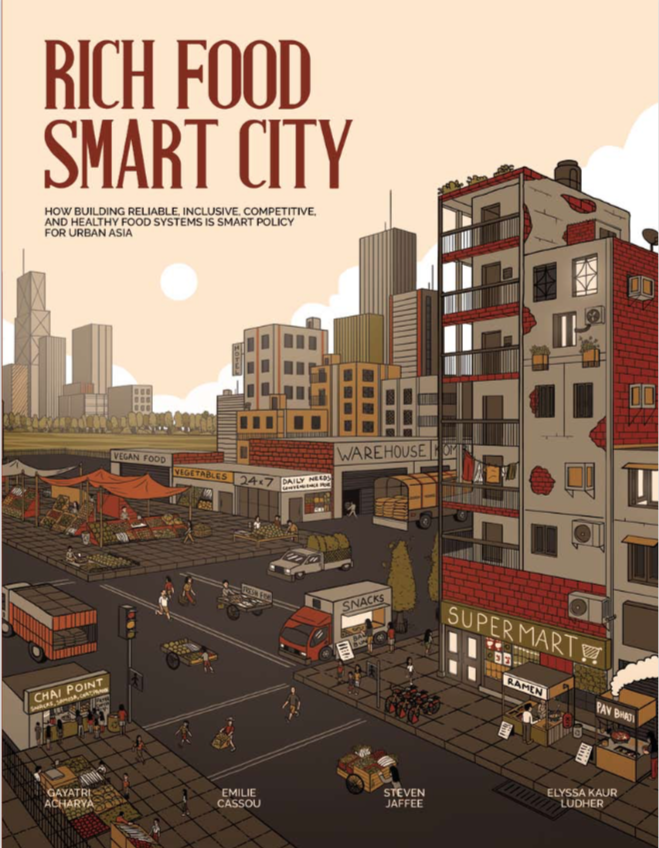
Before taking on my current assignment a few years ago, I was asked to contribute background papers to provide research, advisory and analytical services for the Food Safe and Nutrition Secure Urban Asia project of the World Bank’s Advisory Services and Analytics (ASA) in collaboration with the United Nations Food and Agriculture Organization (FAO). The report was launched in March 2021 and below is the executive summary and hyperlink. I’m honoured to have been listed as a contributor and hope this work will have positive policy influence.

Across Asia, cities are contending with a wide range of food-related issues but most lack a dedicated or coherent set of food policies. For most cities in Asia, food has been a policy and governance blind spot, while national food policy has distinctly lacked an urban perspective. Arguing that food system outcomes are central to the topmost priorities of Asian cities, RICH Food, Smart City calls for cities of all sizes to “get smart to get RICH”—that is, to pursue food policies that foster reliable, inclusive, competitive, and healthy (“RICH”) food systems, better aligned with cities’ contemporary challenges and aspirations. Based on the first systematic survey of urban food policies in 170 Asian cities in 21 countries, RICH Food, Smart City finds that only 8 percent of surveyed cities are “food-smart” and intervene in the food system in ways that are forward-looking, holistic, and inclusive. Nearly three-fourths are either at an early stage of effective engagement or fully in reactive mode, responding to problems as they emerge. Even before the COVID-19 crisis, the need for coherent multisectoral strategies and coordinated action was becoming apparent. The pandemic has now drawn attention to the essential functions of urban food supply chains and businesses and further exposed the vulnerability of urban populations to food insecurity, zoonosis, and foodborne disease. But the crisis has also shown us the potential of the food economy, through its displays of resilience coming from informal marketing channels and budding e-commerce networks and capacities. Rich Food, Smart City illustrates how Asian cities and urban leaders can take on vital food system issues, including food security, diet quality, environmental sustainability, and climate neutrality; and how building RICH food systems can help cities pursue their goals. The book will be of interest to urban planners, policy makers and leaders at the city and national levels, as well as to food system and development practitioners, and others interested in urban food policy and governance.
Citation
“Acharya, Gayatri; Cassou, Emilie; Jaffee, Steven; Ludher, Elyssa Kaur. 2021. RICH Food, Smart City : How Building Reliable, Inclusive, Competitive, and Healthy Food Systems is Smart Policy for Urban Asia. World Bank, Washington, DC. © World Bank. https://openknowledge.worldbank.org/handle/10986/35137 License: CC BY 3.0 IGO.”
URL
http://hdl.handle.net/10986/35137

Categories
Food and agriculture Uncategorized

Almost two years – Presque deux ans

Bientôt, je fêterai mes deux ans au Réseau pour une alimentation durable. Le temps passe vite! Depuis le mois d’aout, j’ai fait la COVID au mois d’octobre, on a organisé un super évènement au mois de Novembre – Cultiver le Changement: Une transition juste vers un système alimentaire régénérateur, et on a eu notre assemblée annuelle en janvier. En plus, j’ai été nommé au Conseil consultatif de la politique alimentaire du Canada au mois de février et on a eu une séance publique épatante concernant la politique alimentaire au mois de mars.

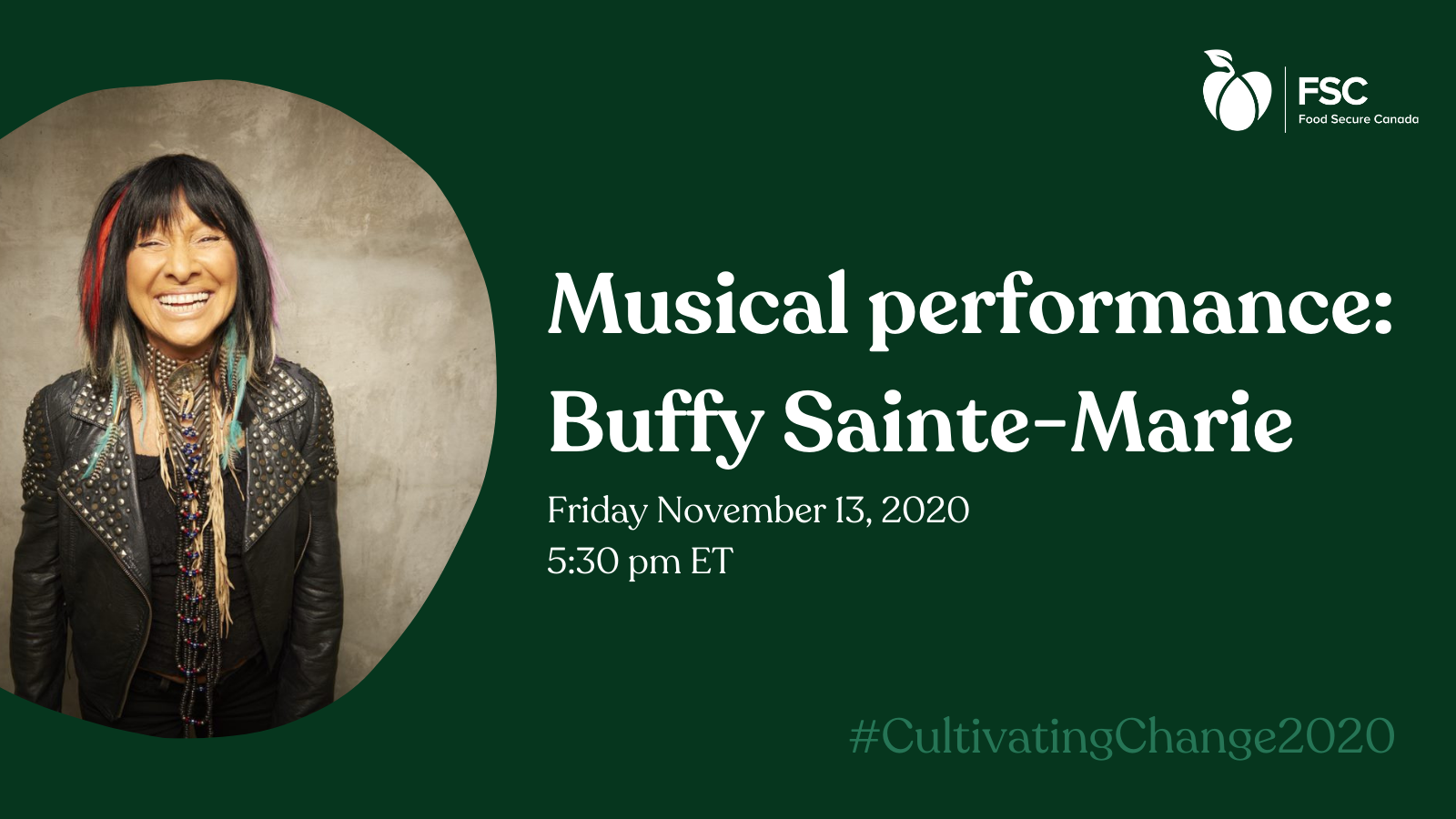
One of the highlights for me was being successful in inviting the great Buffy Sainte Marie to participate in our Cultivating Change online event. The great African-American musician, arranger and producer, Quincy Jones, said that music can touch the hearts and minds of millions of people. Buffy Sainte-Marie is that kind of artist and probably the world’s most iconic Indigenous singer-songwriter. Her work spans 55 years and runs the gamut of politically informed classics such as “Now that the Buffalo’s gone.” Her work has also crossed into the popular domain with the likes of Elvis Presley, the late Joe Cocker and Scottish singer Donovan covering her compositions, among others. She remains until today the only Indigenous person to win an Oscar for her song “Up Where We Belong”, one of my personal favourites with vivid imagery of eagles and mountains and helping us think of getting through life and its obstacles day by day. The great Buffy recently turned 80 and remains an inspirational icon to so many around the world, including me.

Merci pour ces belles experiences! Malgré les défis et la pandémie, le soleil revient et nous souhaitons la bienvenue au printemps.

Categories
Food and agriculture Futures / Foresight

A whirlwind 15 months!

It’s been over 15 months since I joined Food Secure Canada as Executive Director. En français, c’est le Réseau pour une alimentation durable – un sens un peu différent – enfin, longue histoire… Food Secure Canada is a national, bilingual not-for-profit organization devoted to achieving a healthy, just and sustainable food-system through knowledge sharing, networking and advocacy, particularly at the federal level. Right up my alley! I’ve been based in Montréal most of the time since summer 2019 with occasional trips to Vancouver to see family. Comme de raison, depuis la pandémie, les voyages sont un peu moins fréquents…

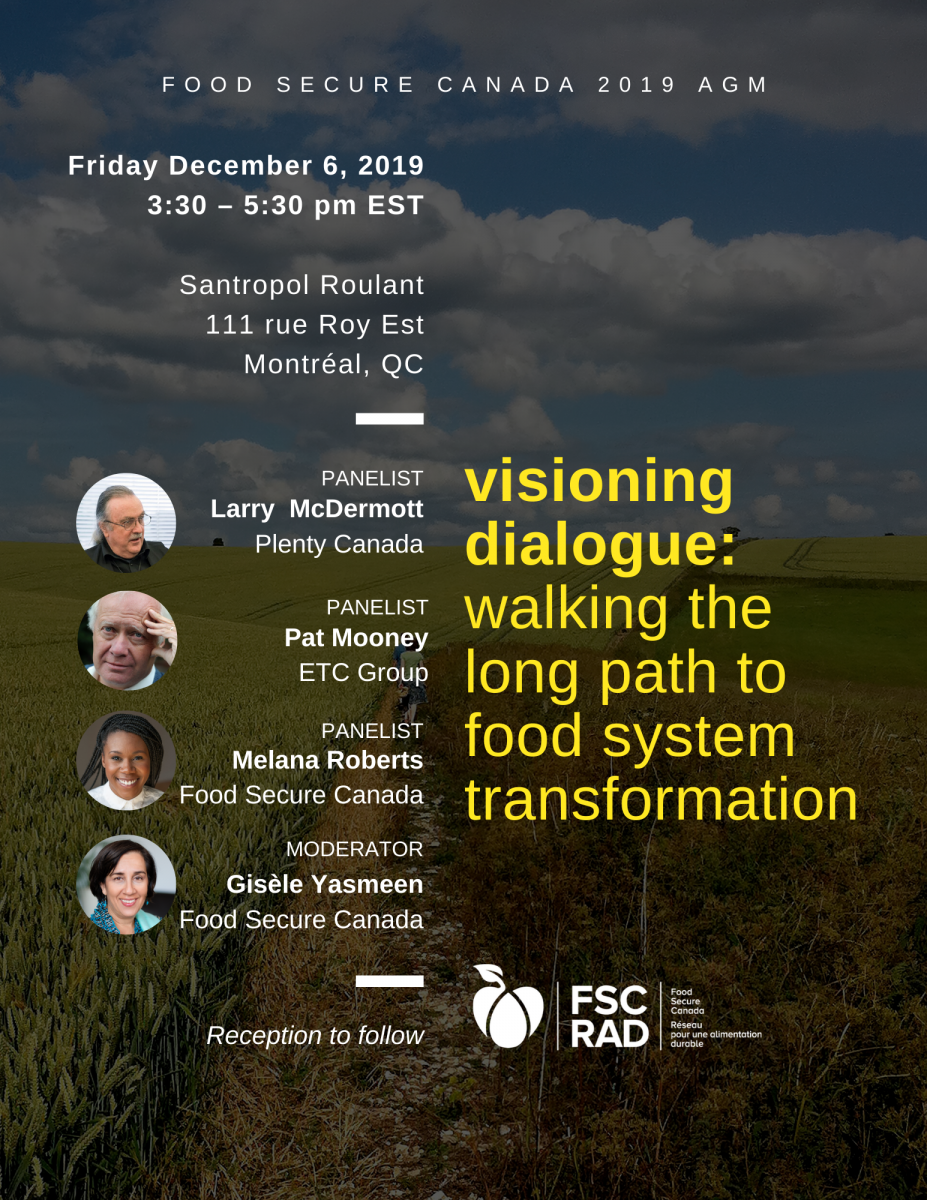
The highlights since May 2019 have included both meeting and reconnecting with wonderful food activists, scholars and policymakers from coast to coast to coast, being highly involved in the launch of the Food Policy for Canada in June 2019, a parliamentary appearance, our Eat Think Vote campaign during the federal election, our AGM, visioning dialogue and board-staff retreat and a highly successful e-letter-writing campaign that resulted in 36% of all federal MPs being contacted by their constituents. In addition, in collaboration with the team, we’ve produced high quality and frequent media commentary in English and French including Le Devoir, two articles in Policy Options, one in July 2019 and the other in May 2020, the Hill Times, several mentions in iPolitics and an interview on CBC Sunday Edition with Michael Enright following the publication of our policy action plan on food system transformation in light of COVID-19. Speaking at a CARE/FAO webinar on the impacts of the pandemic was also exciting. Speaking engagements have been engaging and invigorating. We have been fortunate to both retain the confidence of a number of funders as well as attract new support while “changing the engine in mid-flight” with respect to making progress on long term strategic and operational issues. Thank you to our supporters. We were also delighted to welcome our sister, charitable organization – the Peoples Food Institute. Please join me and others in making a tax-deductible donation!

J’ai la chance de travailler aver du monde extraordinaire qui partagent une même passion et des valeurs. The most satisfying is seeing citizens take action and organizations taking up our work to bolster their own efforts, an example being West Coast Environmental Law. Furthermore, our organizational journey to work in a truly inclusive way to embrace the ways of thinking and knowing of Indigenous and racialized communities in a truly anti-racist and decolonized has been an opportunity for me to learn and grow as a leader. Never before have I had to bring together my food-systems work with what we used to call equity, diversity and inclusion (now considered a bit old fashioned by our inspiring, brilliant youth who are rightly pushing their elders to go further and deeper to challenge established societal power structures). Merci à tous et toutes au RAD!

Categories
Uncategorized

Belated thanks to Thrivehire for interviewing me in December!

I was delighted when a former Simon Fraser University Graduate Student who had done a practicum with me in 2016 approached me about doing an interview for Thrivehire. Here is the edited transcript from their website. Thanks Annalise!

https://thrivehire.org/its-a-balancing-act-how-dr-gisele-yasmeen-has-built-a-career-by-wearing-many-different-hats/

Categories
Knowledge mobilization Uncategorized

Les migrations francophones dans l’Ouest canadien – questions de diversité

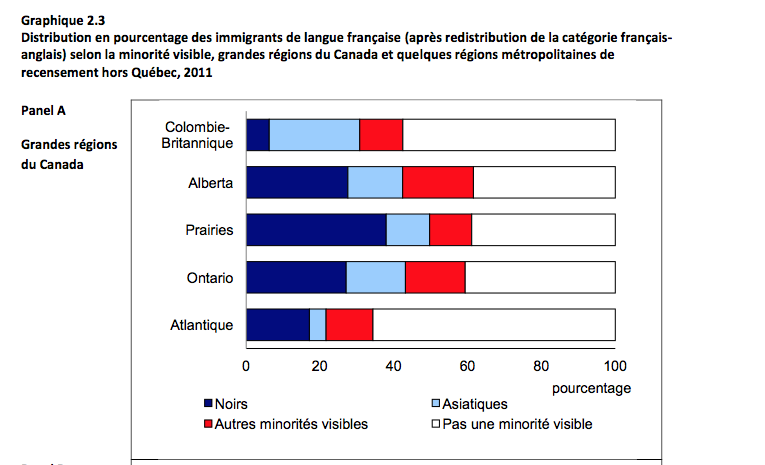
Voici un lien à ma chronique diffusée hier à Radio-Canada au sujet de l’immigration francophone dans l’ouest canadien et les questions de diversité, tant au niveau historique que de nos jours. Le sujet fut inspiré par ma ma présentation sur la francophonie canadienne dans l’ouest canadien lors d’un colloque organisé par l’Association d’études canadiennes le 1er mars à Gatineau (Aylmer). Suite à cette présentation, Marc-Aurélien Négri m’a contacté enfin de rédiger un article publié par La Source le 8 mai. Merci en particulier à la réalisatrice compétente de l’émission Les Samedis du Monde et mon amie de longue durée, Saïda Ouchaou!

Categories
Asia Higher education and research

The Importance of the Asia-Africa Relationship

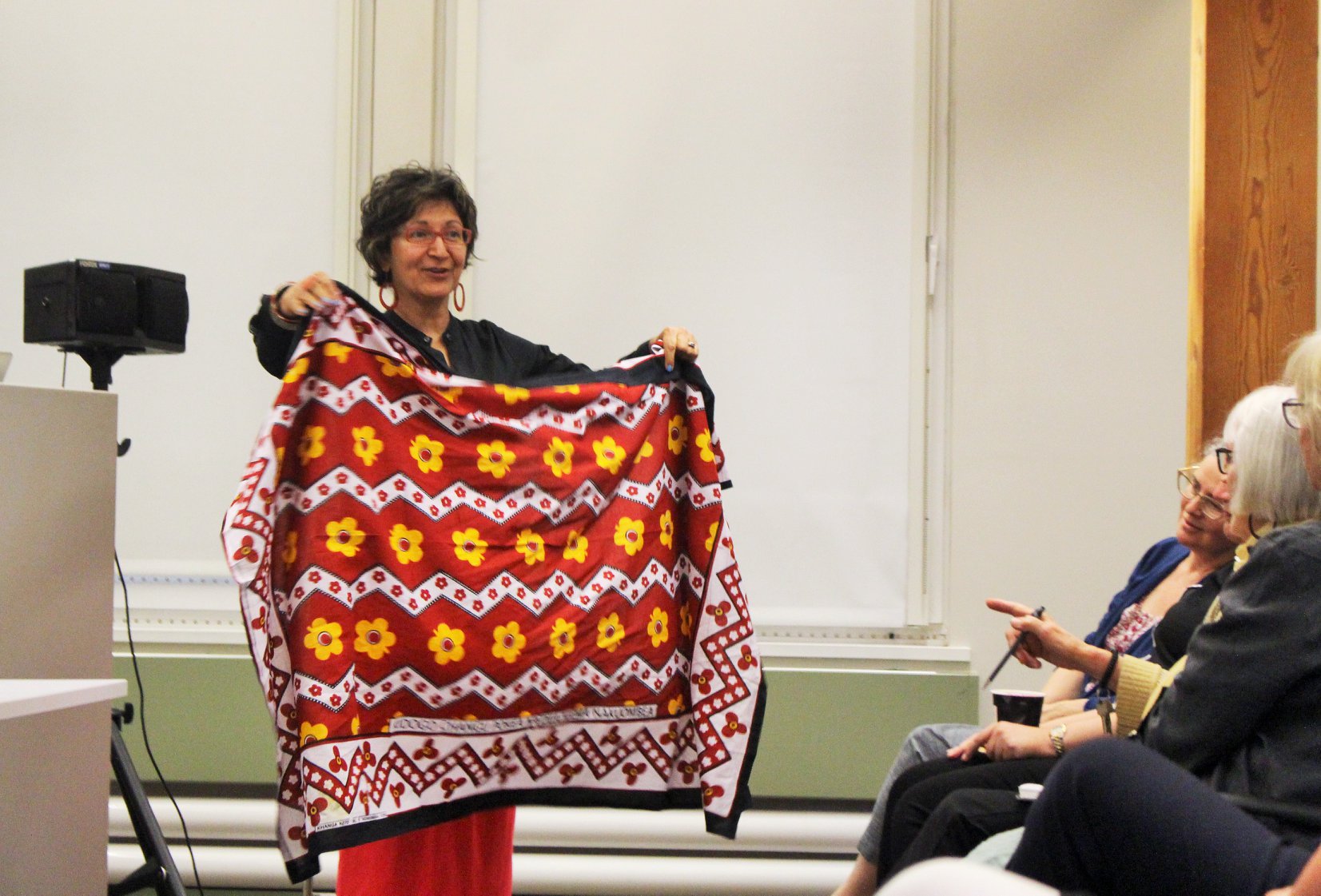
The relationship between Asia and Africa is a longstanding one, historically, and has been growing exponentially in recent years though increased investment and trade. Chinese porcelaine from the 9th century has been found in the archaeological site of Great Zimbabwe and the cotton trade from India to Africa dates back to the time of Herodotus in the 5th century BCE. I had the pleasure of organizing a presentation at UBC on May 29th by Dr. Renu Modi of the University of Mumbai on the manufacturing of textiles – mainly kanga and vitenge (the plural of kitenge) in India for the growing African market. China is also highly involved in the manufacturing of this cloth used primarily for the garment industry. Dr. Modi presented her documentary film, Common Threads, which was featured recently in the Zanzibar International Film Festival. Approximately 40 people were in attendance. Thank you Renu!