Categories
Asia

The Road to Myanmar?

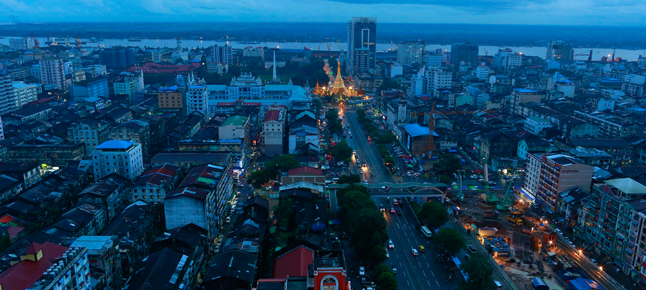
The following article was published by the Canadian International Council’s Open Canada on May 14th, 2014. The text can be found here.  I am also reproducing the full text below. The image is courtesy of Reuters.

The recent death of Myanmar’s longest serving political prisoner, Win Tin, and growing awareness of the plight of the country’s minority Muslim Rohingya has received little media coverage in Canada, save for OpenCanada. This is perhaps unsurprising given the small number of Canadians who have experience in this part of the world.

My own earliest exposure to Burma may have been listening to a recording of the old song “The Road to Mandalay,” with lyrics adapted from Kipling. On my first trip to southeast Asia in the mid-eighties, a few stalwart young foreigners were starting to visit Yangon (Rangoon), which was still relatively difficult to access. The country’s reputation at the time was tainted by human rights abuses and recalcitrant military rule. In the decades since, we have witnessed the house arrest and subsequent release of Aung San Suu Kyi and the gradual opening up of this isolated country. Economically speaking, this has been in keeping with changes in the region, such as Doi Moi in Vietnam, which began in the 1990s. However, Myanmar is on its own unique path of transformation, especially politically, including experimentation with multiparty elections in recent years. That said, some have concluded that the experiment has thus far failed due to continued control of the military and reports of electoral irregularities and voter intimidation.

Professor Robert Anderson of Simon Fraser University, who has been conducting research in Myanmar for 15 years, has been urging leaders in higher education and diplomacy to pay attention to the rapidly shifting sands in Myanmar, just as the Europeans and Chinese have been doing for some time. The changes are not without their challenges and controversies, particularly in light of the watershed moment associated with the chairing of ASEAN’s upcoming meetings in May. As recently as May 9th, the media reported that an Australian journalist was deported from Myanmar for covering a demonstration calling for greater freedom of the press.

The crossroads between South and Southeast Asia is intriguing. Previously administered as part of British India, Burma exhibits features of both regions. The educated elites speak Indian English, the diet has South Asian influences, and the highly diverse ethnic composition of the country—including the Bengali-speaking Rohingya—reflects the country’s geography and history.

The controversy regarding the naming of the country is in many ways indicative of the current struggle to chart a more open, democratic, and economically viable course for this highly multiethnic society. According to Dr. Ba-Thann Win, political expert and Burmese dissident, the choice of name is politically significant. He deliberately uses the name Burma rather than Myanmar. Besides taking issue with dictators changing the name of the country without popular consent, Dr. Win reminds us that the word “Myanmar” privileges one ethnic group rather than all of them in this multicultural country. This name change, he argues, takes the vision for the polity further away from the Panglong Agreement of 1947 spearheaded by the father of Aung San Suu Kyi, which garnered the support of all the major ethnic groups to create an inclusive vision for a united Burma on the eve of independence from India. Others, however, point out that the colonial term ‘Burma’ refers to people who speak the Bamar language and who once occupied the Irrawaddy River heartland of the country, leaving out other ethno-linguistic groups and particularly those on the frontiers.

Meanwhile, as both Dr. Win and Professor Anderson explained in recent presentations at the University of British Columbia (UBC), the country has been undergoing breathtaking changes over the past few years and Canadian students are taking a growing interest in Burma. While there has been an official transition away from military rule and the iconic Aung San Suu Kyi has been released from house arrest to become a controversial contender for political power, the country still has several struggles to overcome to fully open up democratically.

Given the country’s strategic location, China and other world powers are taking serious interest in developing mining resources, shipping energy across the country via pipelines, and investing in large hydro-electrical projects. The financial figures are staggering. Burma/Myanmar now has 15 billionaires and that figure is expected to grow to 20 by 2020 according to Dr. Win. Preliminary statistics from Professor Anderson indicate that foreign direct investment has grown twelve-fold from 2008-09 to 2010-11. While Canadian trade with Burma is still in its infancy, young Vancouver telecoms entrepreneurs like Rita Nguyen of SQUAR are riding the wave of wireless penetration, which has grown from 10 percent in 2012 to nearly 30 percent this year. However, telecom and Internet costs remain among the highest in the world.

Post-secondary institutions from around the world are also beginning to take notice and collaborate with Burma’s emerging higher education community. Following a high profile visit to Vancouver in Fall 2013 of Dr. Aung Tun Thet—Chief Economic Advisor to the President of Myanmar—The University of British Columbia recently announced Dr. Thet’s appointment as Honorary Professor at UBC’s Institute of Asian Research. The announcement was made in late February in Yangon at a “nationally televised ceremony and in the presence of the Canadian, Singapore and Indian Ambassadors to Myanmar, several leaders of universities, students, investors and businesses.” Discussions on Canadian campuses seem to be indicating that the higher education community, spurred on in part by the interest of a growing cadre of young Canadian students, is taking an interest in political developments in the country.

In light of a growing economy and opportunities for democracy and economic growth in the country, Myanmar is at an interesting and fruitful turning point in its engagement with the world and Canada should be an integral part of this engagement.
Categories
Asia Food and agriculture

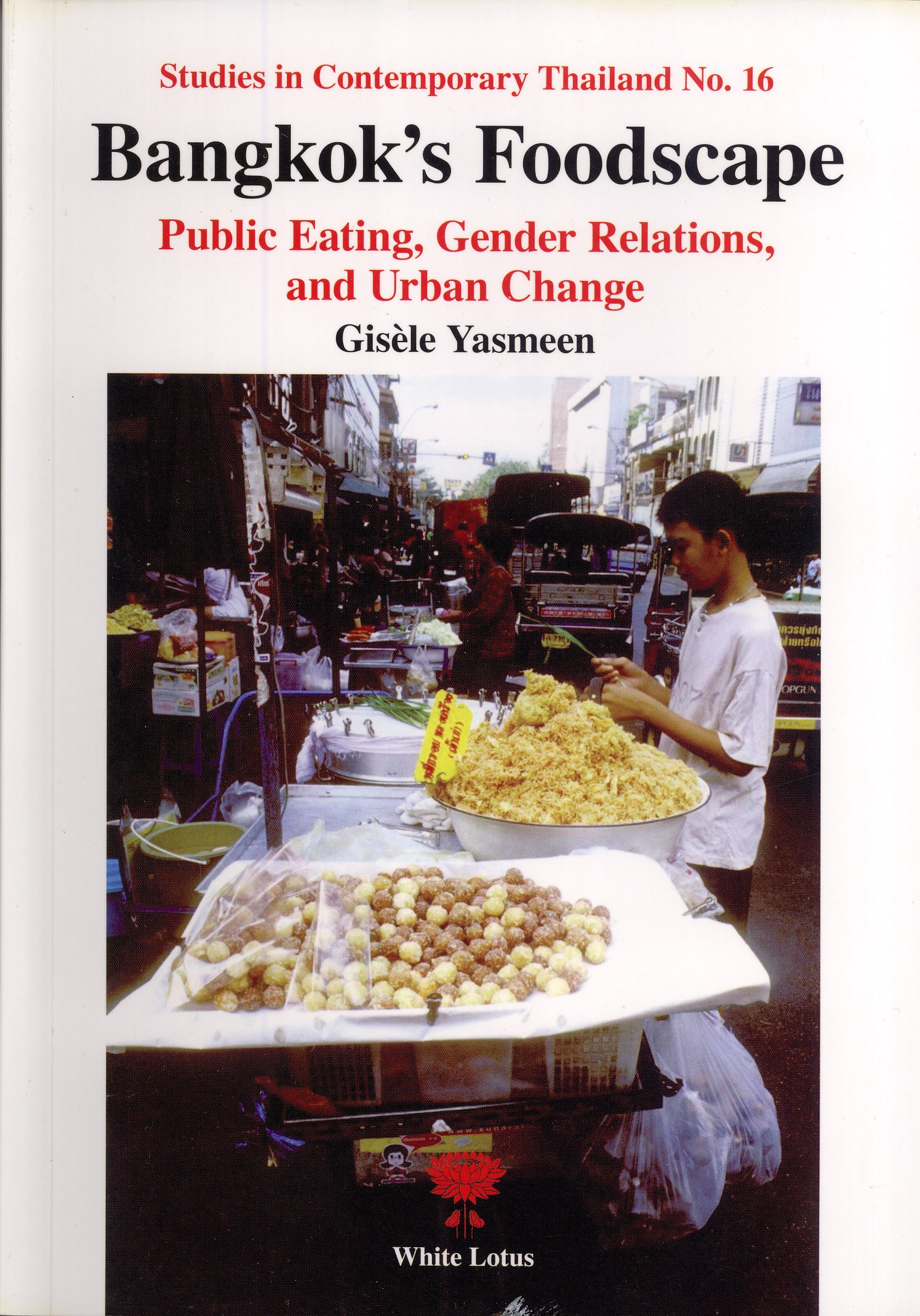
Bangkok Foodscape: Public Eating, Gender Relations, and Urban Change

This book provides an overview and analysis of the habit of “public eating” in Thai society with specific attention paid to the case study of Bangkok where the phenomenon has been particularly widespread for several decades. Using the well-established ethnographic approach of “thick description”, this contribution to the study of Thai and Southeast Asian foodways concentrates on the nexus between eating habits, the social construction of gender and patterns of urban development in one of the world’s mega-cities. By providing a detailed snapshot of the rapid growth period of the early to mid-1990s in central Bangkok and concluding with insights as to the impacts of the economic crisis that wreaked havoc in the latter part of the decade, I illustrate the recursive social, economic and cultural impacts of the “foodscape” on urban space.

Categories
Asia Food and agriculture

Urban Agriculture in India: A survey of expertise, capacities and recent experience

“How will South Asian cities be fed?” is an important question demanding attention due to the rapidly growing urban population of the sub-continent. Urban and peri- urban agriculture (UPA) is one set of activities resulting in greater food production, improved livelihood opportunities for urbanites and the enhanced environmental quality of cities. This report provides an overview of existing UP A resources and activities in India with particular emphasis on Delhi and Bangalore though many examples from other Indian cities are also presented.

Source: http://doccentre.net/Besharp/resources-expertise/Urban_Agriculture_In_India.pdf

Categories
Asia

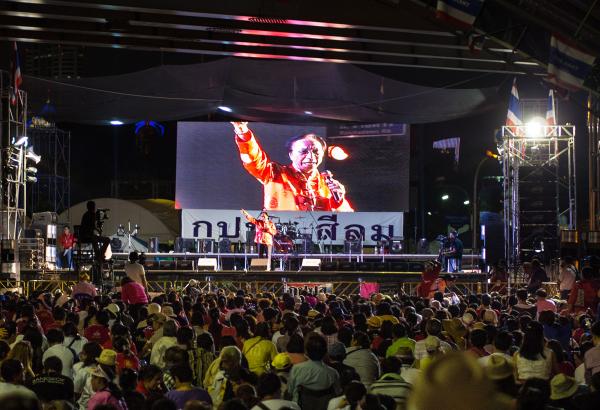
Why what’s happening in Thailand right now should matter to Canadians

This article, on the political situation in Thailand, was published on February 19th by Embassy. The text is available here (may require a subscription to access).

Categories
Program design & delivery

10 Things I learned at SSHRC

This entry was originally published in late December 2013 by SSHRC in English here and in French here

As I prepare to leave SSHRC for a new life in Vancouver, it is an opportune moment for me to look back and reflect on the progress achieved and lessons learned over the past seven years. During my tenure at SSHRC as vice‑president, research, and, prior to that, vice‑president, partnerships, it has been a privilege to have played a role in a publicly funded research institution, guided by a vision of supporting quality and facilitating connections across all sectors, leading to the greatest societal benefits. There is great complexity involved in structuring this support; SSHRC calls upon the extraordinary voluntary service of the research community and, often, its partners across the public, private and not‑for‑profit sectors, to select the very best ideas and talent for support through its new Talent, Insight and Connection programs.

Building on these reflections, I am pleased to share 10 key learnings from my time at SSHRC:

  1. Start with the vision. SSHRC takes considerable care and effort in setting out and articulating clearly stated goals to fulfill the council’s mission and mandate. Strong engagement with our staff, with the research community, and with our partners has been key to gaining a collective understanding of the purpose, objectives and mechanisms with which we can meet our goals. It is imperative to link the higher level objectives with our day‑to‑day operations.
  2. Words matter. Language is central to how an organization and community sees itself. The rebranding of our programs to Talent, Insight and Connection, for example, clearly reflects the desired outcome of projects we support: namely, to develop talented individuals, to support great ideas that provide important insights for societal benefit, and to foster connections among academics and beyond for mutual benefit.
  3. Make the case. When it comes to publicly‑funded research, we must consistently articulate the impact of the research and talent we support. SSHRC grant applicants are now required to discuss the intellectual and broader societal importance of their work. The results thus far are promising and facilitate the social sciences and humanities community towards seeing itself as essential to a successful society in the 21st century.
  4. Engage, communicate and listen. SSHRC has gone to great lengths to reach out and engage with the research community, invest in various interactive communications products and activities, and seek feedback on issues ranging from the structure and design of SSHRC programs to the Imagining Canada’s Future initiative. SSHRC is committed to continuous improvement in all that it does, based on the principle of strong community engagement.
  5. Know your history. When reading through historical documents, one notices enduring issues, including, for example, the challenge of interdisciplinary research. SSHRC has taken innovative approaches to funding opportunities such as the very successful Digging into Data challenge. The challenge of building interdisciplinarity into core programming is one that requires breaking down various institutional and disciplinary barriers both within research funding agencies and beyond. In all of these matters, knowing your history as an organization can help in building upon on previous experience to realize future success.
  6. Work proactively with postsecondary institutions. One of SSHRC’s many achievements has been the establishment of the SSHRC Leaders—senior university administrators who serve as channels of communication between their institutions andSSHRC, and who relay information on program and policy developments to their colleagues. This initiative has not only improved communications and engagement overall but has created a community of practice and helped the social sciences and humanities position itself as a strong voice on campus.
  7. Pay close attention to the details. The merit review process, for example, is multi‑faceted and requires attention to many details, such as designing effective program objectives and aligning these with evaluation criteria; training staff and reviewers; communicating with institutions and applicants; structuring committees; effectively using new technologies; and the importance of scoring, voting and other procedures. Realizing a strategic vision through effective program delivery is always a complex process and a work in progress, however, it is through this fundamental process that the vision of an organization such as SSHRC becomes a reality.
  8. Be patient. Change takes time. Inter‑subjectivity—as all good humanities scholars know—is the name of the game, and it can take many years, both internally and externally, to achieve some degree of alignment on the intent and the implementation of major initiatives. SSHRC‘s program architecture renewal has taken three years to implement for grants, and is now being adopted for scholarships and fellowships. All these changes require proper monitoring and appropriate adjustment moving forward.
  9. Remain impartial. One can become quite protective of one’s projects in the research granting business. After all, designing and delivering programs and corporate projects is hard work and one takes a certain pride in the result. Nevertheless, cultivating a certain detachment is essential to keeping an open mind on continuous improvement.
  10. It’s about teamwork. In recent years, SSHRC has simplified, consolidated and rendered its program structure more flexible and open. The tri‑agencies have released standardized and updated policies on conflict of interest, responsible conduct and research ethics. SSHRC has made the review process far more transparent with respect to clarifying its principles for merit review, nominating potential reviewers, and, most recently, posting its newly harmonized merit review manual on its website. These achievements could not have been possible without the active participation of many individuals and organizations. Translating intent into reality is an ongoing process which requires tremendous collaboration.

Through its many steps forward over the years, continuous improvement, and collaboration with sister agencies and partners across the public, private and not‑for‑profit sectors and internationally, SSHRC is poised to continue to contribute to a brighter future for Canada and the world. Thank you, SSHRC. It’s been a pleasure and opportunity of a lifetime.

Categories
Futures / Foresight

Imagine a Better Future

This is a guest post for the Banff Forum, originally published in November of 2013.

The tag line for the Banff Forum is “Young leaders committed to building a better Canada”. The Social Sciences and Humanities Research Council – or SSHRC – also sees itself as committed to building a better Canada and world by supporting research and graduate research training. We live in an era of daunting societal challenges and rapid change. How does the research community take a proactive position with respect to identifying, analysing and responding to “grand challenges” – not only those that are obvious us now, but particularly those that are on the horizon, which may not yet be getting the attention of society in general and the research community in particular? How does one go about identifying the big questions of the future – many of which might require interdisciplinary and multisectoral collaboration? Research is about learning, discovery and changing paradigms and often about finding a way forward to create a better world and future.

Two years ago, SSHRC launched an ambitious foresight project to identify what issues Canada could be facing in a rapidly evolving global context in the next few decades, as well as to enhance the ability of the Canadian social sciences and humanities research community to contribute its knowledge, talent and expertise to both understand and shape that future. While SSHRC had “cast ahead” in the past, with such early investments in aging studies and the digital humanities, a comprehensive, system-wide approach including public engagement, had not been undertaken. The results have been encouraging.

We undertook a variety of data-gathering techniques in this initiative, including scanning and a scenario-building exercise to gather multiple lines of evidence, in collaboration with the research community across disciplines and partners across the public, private and not-for-profit sectors both in Canada and abroad. Our moniker became “Imagining Canada’s Future” to illustrate that this was to be a creative process; not about predicting, but rather engaging collective knowledge and imagination to think beyond the headlines of the day and to weak signals that were beginning to emerge.

Engagement and support of the research community across disciplines – including those beyond the social sciences and humanities – was a critical success factor to this project from the onset. After all, ”grand challenges” often cross the boundaries of disciplines and fields of knowledge. Climate change is a prime example; an issue now firmly on the agenda of the research community across disciplines. Likewise, working with partners across the public, private and not-for-profit sectors both in Canada and abroad from the beginning was seen as essential to bring in a variety of perspectives. At the same time, working across disciplinary and sectoral boundaries is challenging due to competing paradigms, world views and priorities.

As a publicly-funded research agency, our focus was not to uncover looming future challenges that are already well-ensconced on the research radar but, rather, to identify areas that are just beginning to emerge and may not yet have a constituency. While we had a few set-backs, we were patient and persisted with an approach that generated confidence for the process and outcome of the project as we undertook a range of successful engagement activities. These included a series of regional panels led by leaders in post-secondary institutions across the country, in addition to a scenarios workshop with Canadian and international participants. Input was also solicited from an international expert panel organized by the prestigious Canadian Institute for Advanced Research. In the end, if we include social media outreach, thousands of individuals were sought out to provide input in this project. Recognizing its role as a funding agency in building research capacity, SSHRC strove to develop effective selection criteria that focused on identifying and articulating areas that were meaningful and would allow experimentation with new approaches to push research frontiers. If we did not learn something new substantively new by the end of the exercise, we would have failed.

So, after all that effort, did we learn anything new? We think we did as summarised in a total of six future challenge questions which will, we hope, inspire and stimulate new, exciting research and related activities.

1.What new ways of learning, particularly in higher education, will we need to thrive in an evolving society and labour market?Given the growing debates about jobs/skills/knowledge mismatch, our exercise urges an exploration of the relationship between the education system – particularly our own “industry” of post-secondary institutions – and the knowledge and skill needs of the emerging 21st century.
2.
What effects will the quest for energy and natural resources have on our society and our position on the world stage? To what extent are emerging geopolitical issues at home and abroad related to the control of these resources given new methods of exploitation, growing demand and the alarming issue of access to the necessities of life? These are not strictly “technical” issues and the social sciences and humanities have an important role to play going forward.
3.
Given our history, which, by necessity informs our future, how does a settler-society like Canada – dominated by English and French speaking and other rapidly growing communities with ancestry from throughout the world – come to terms with indigenous First Nations, Métis and Inuit peoples? Specifically, how will the experiences and aspirations of Aboriginal Peoples inCanada be essential to building a successful shared future?

4.
What might be the implications of global peak population?According to UN estimates, global population may peak at current levels and then may decline by 2050, possibly earlier. Why this might be happening and what are the implications, not just demographically, but also in terms of environmental, ethical, economic, legal and broader social impacts and values? What, for example, are the implications for “end of life” issues on rapidly aging planet?

5.
Similarly, we learned more about rapidly emerging “God-like” technologies such as 3D printing, robotics and the “omics” – many of which are converging and also have huge societal implications, which urgently need to be studied. Many of these technologies are having a profound impact on the scholarly endeavour itself, especially in terms of new methodologies for teaching and research.

6.
In a rapidly changing “multipolar world”, how do we keep up with myriad emerging regions, beyond the BRICs to include the CIVETS, sub-Saharan Africa and Central Asia whose populations are also finding their ways to our shores and shaping our own culture, economy and society? As the HSBC ad goes, “In the future, there will be no markets left waiting to emerge”. In this context, what knowledge is needed to thrive in such an interconnected, global landscape?

These areas of focus have emerged from the Imagining Canada’s Future initiative. Together, with those who have been involved and others, we are confident of having helped inspire new ways of thinking about research, collaboration and the link between the past, present and the futures we may want to create – and certainly the ones we may wish to avoid – for our families, communities and societies. Imagining Canada’s future has led to a productive national discussion about the questions we should be asking today in order to enhance our understanding to create a better future.