Bientôt, je fêterai mes deux ans au Réseau pour une alimentation durable. Le temps passe vite! Depuis le mois d’aout, j’ai fait la COVID au mois d’octobre, on a organisé un super évènement au mois de Novembre – Cultiver le Changement: Une transition juste vers un système alimentaire régénérateur, et on a eu notre assemblée annuelle en janvier. En plus, j’ai été nommé au Conseil consultatif de la politique alimentaire du Canada au mois de février et on a eu une séance publique épatante concernant la politique alimentaire au mois de mars.
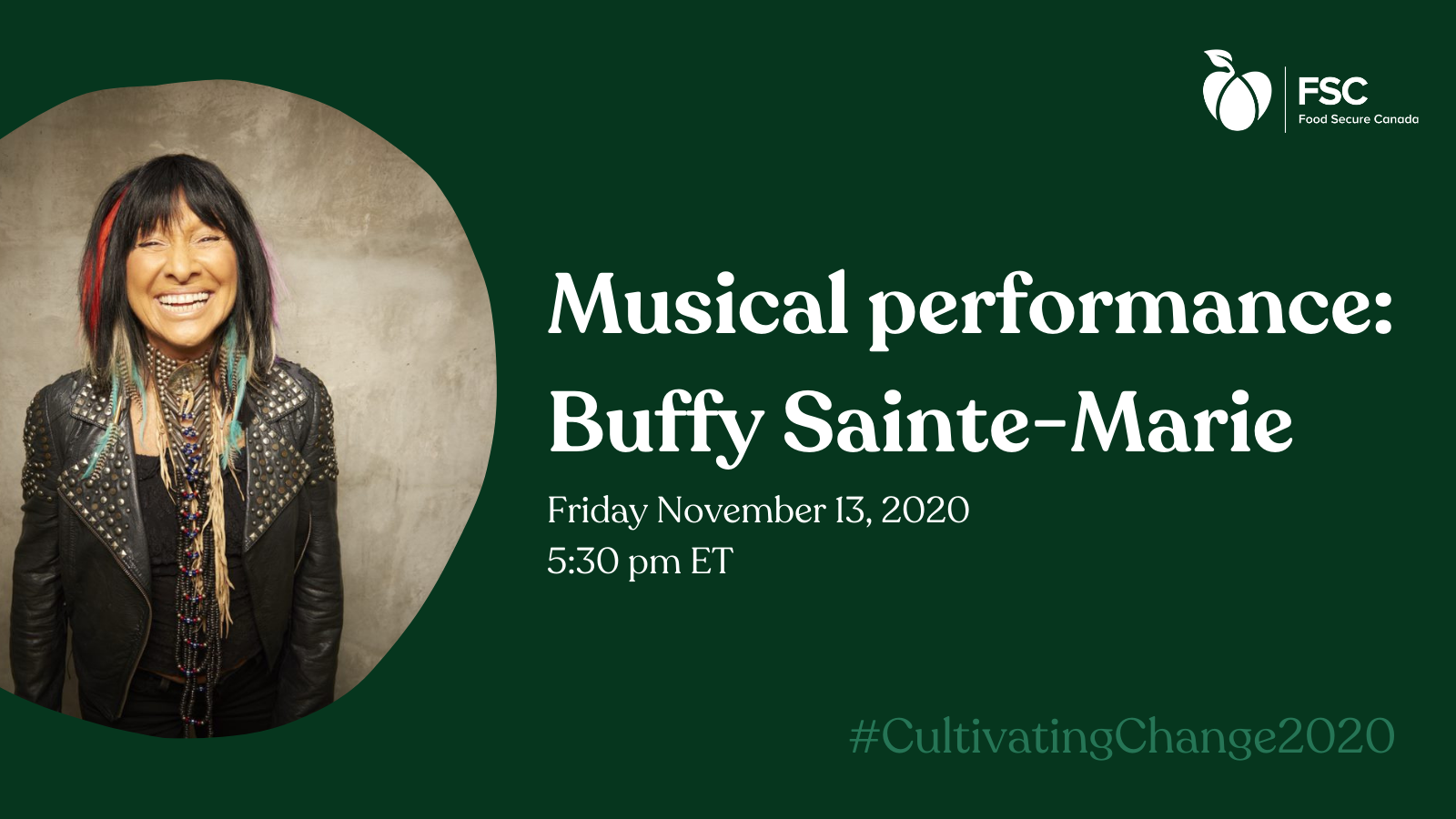
One of the highlights for me was being successful in inviting the great Buffy Sainte Marie to participate in our Cultivating Change online event. The great African-American musician, arranger and producer, Quincy Jones, said that music can touch the hearts and minds of millions of people. Buffy Sainte-Marie is that kind of artist and probably the world’s most iconic Indigenous singer-songwriter. Her work spans 55 years and runs the gamut of politically informed classics such as “Now that the Buffalo’s gone.” Her work has also crossed into the popular domain with the likes of Elvis Presley, the late Joe Cocker and Scottish singer Donovan covering her compositions, among others. She remains until today the only Indigenous person to win an Oscar for her song “Up Where We Belong”, one of my personal favourites with vivid imagery of eagles and mountains and helping us think of getting through life and its obstacles day by day. The great Buffy recently turned 80 and remains an inspirational icon to so many around the world, including me.
Merci pour ces belles experiences! Malgré les défis et la pandémie, le soleil revient et nous souhaitons la bienvenue au printemps.